Observation Access
Institutional Preview
Observation-only access for evaluation and feedback.
- Monitoring views
- Signal snapshots
- Trade-level logs
- Structured review artifacts
- No code, no weights, no execution, no integration
QuantAI Ecosystem. Designed to remain governable through regime shifts. Built for allocation, risk, execution, and monitoring in one governed loop.
The autonomous hedge fund OS you can integrate into your fund stack — built to scale across asset universes while keeping headcount flat.
Disclaimer: Not an offer. Not investment advice. For technology evaluation only. Integration is a commercial path. The preview is strictly observation-only: no code, no weights, no integration.
Real risk does not scream. It drifts. The failure mode is silent degradation.
THE SCALING PARADOX
The longer capital sits in a position, the more time drift has to accumulate.
7-20 day horizon — the deliberate middle ground: long enough to capture real trends, short enough to keep capital fluid and react before drift compounds.
Quantic Eagle is not another signal model. It is the governance layer you cannot hire.
THE "BUILD TRAP": WHY INTERNAL R&D FAILS
Everyone hires PhDs. Few succeed.
The ecosystem approach: governed, replicable, end-to-end. No reinvention. No years of rebuild to scale across assets and universes.
A disciplined governance loop that stays controllable under regime shifts: allocation, risk, execution logic, and monitoring in one system.
One rule: if it does not pass, it does not ship
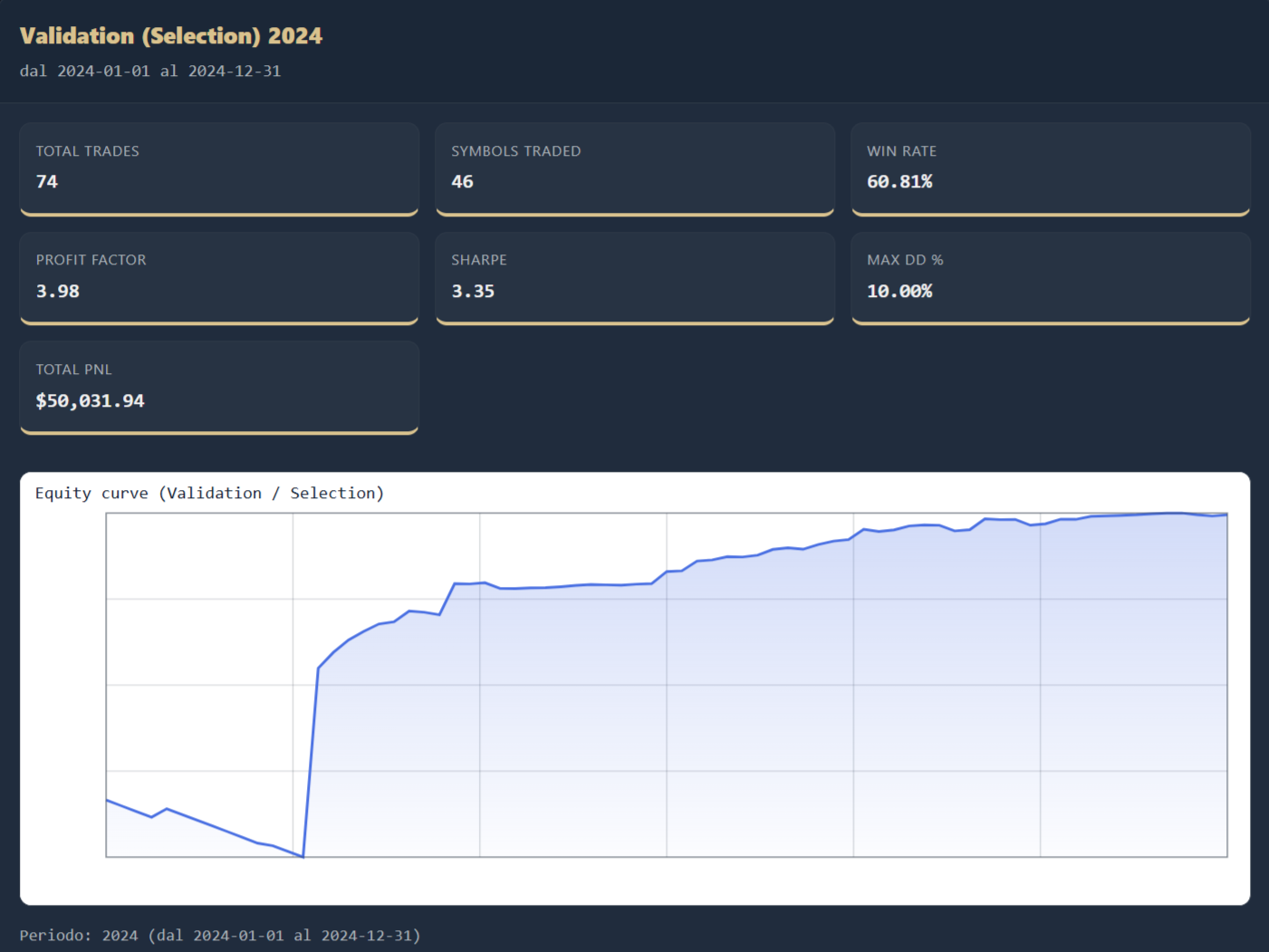
Internal snapshot (selection phase): KPIs and equity curve.
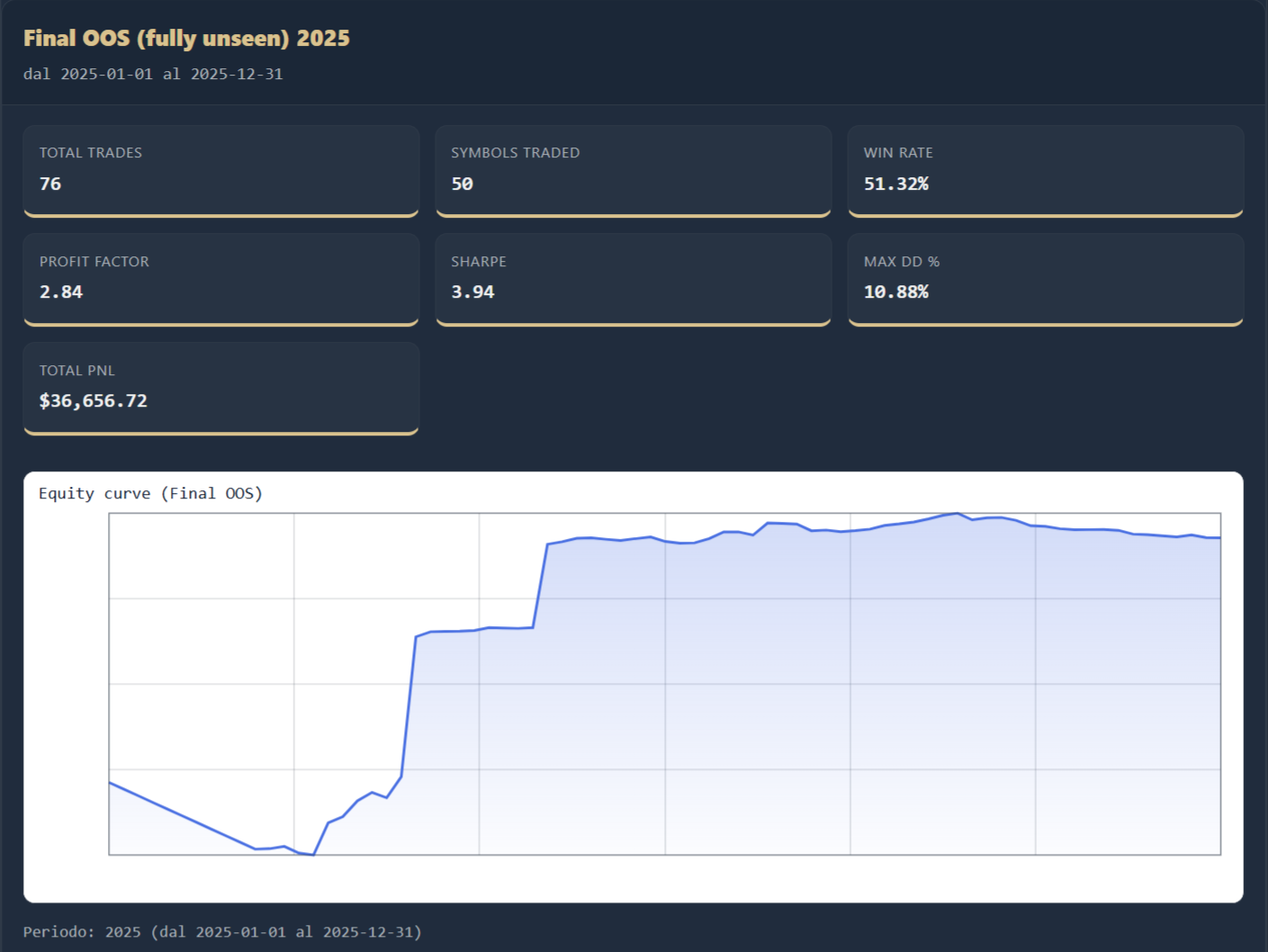
Final out-of-sample holdout: KPIs and equity curve.
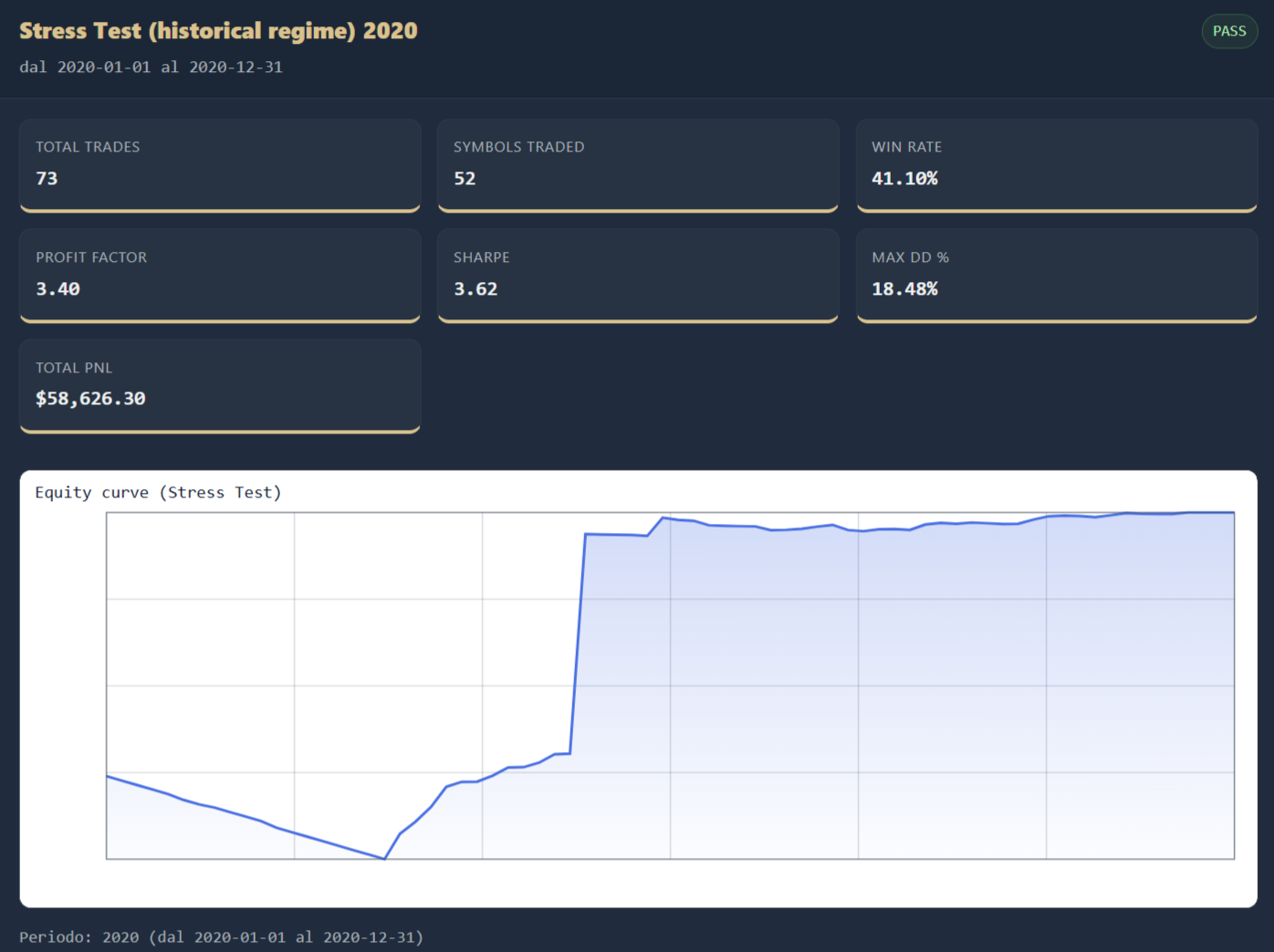
Stress regime snapshot: KPIs and equity curve.
Internal research snapshots; consistent assumptions. This preview is observation-only.
Evaluate behavior and monitoring outputs, without receiving proprietary internals.
A limited, observation-only preview of the monitoring and risk dashboard: no code, no weights, no integration, just enough to see how the system behaves in today's market regimes.
Institutional and professional counterparts, prop and systematic boutiques, and bespoke strategic partners aligned with this direction.
Start with observation-only evaluation, scope a partner-defined mandate, or discuss a full deployment path.
Institutional Preview
Observation-only access for evaluation and feedback.
Custom Mandate Evaluation
Scope a governed pilot around your target universe, constraints, and operating preferences.
You define the mandate. We scope, validate, and frame the deployment path.
Deploy on a pre-validated asset universe with proven governance, established constraints, and active monitoring.
Full Deployment
Discuss a governed enterprise deployment path into your portfolio stack.
Observation-only evaluation when offered, or a more defined commercial path if your mandate is already clear.
Selected path
Observation-only access for evaluation and feedback, with monitoring views and structured review artifacts.
Select one path. The message below is pre-filled, editable, and can be reset at any time.
Quick clarifications for institutional evaluation and monitoring discussions.
It means a governed system covering the full portfolio decision lifecycle: signals, allocation, risk controls, execution decision-making (entry/management/exit), and monitoring. The focus is governance: repeatable decisions plus monitoring outputs that make behavior verifiable during evaluation.
Think of it as a hedge-fund-grade operating layer that connects research discipline, repeatable validation, portfolio/risk controls, and monitoring telemetry under one governed system—built to scale across asset universes while keeping oversight explicit.
Important: the preview is strictly observation-only. No execution access, no proprietary training code, no model export, no weights, and no integration.
Signal generators often focus on directional calls. A portfolio control system focuses on decisions under uncertainty: how large positions are, what constraints apply, what risk budget is being used, how positions are managed/exited, and how behavior is monitored as conditions drift.
A simple illustration:
Observation-only means you can review monitoring and risk outputs for evaluation and feedback, but you cannot execute, integrate into your environment, export the model, or access proprietary code or model weights. The goal is clean validation with clear boundaries.
A limited, observation-only view of monitoring and risk dashboards, plus structured review reports and signal snapshots— enough to evaluate behavior in current market regimes.
The preview is designed with clear IP boundaries: you evaluate behavior and monitoring outputs without receiving proprietary internals. No code, no weights, no model export, and no integration. Access may be time-limited when offered (not guaranteed).
A regime shift is a structural change in market conditions—volatility, correlations, and liquidity can change quickly—making behaviors calibrated on a different period degrade. The system is designed to remain governable as regimes change.
Silent degradation is gradual drift over time: exposures creep, correlations flip, liquidity changes, and a system can keep trading "as if nothing changed" until the problem becomes visible (e.g., drawdown). Monitoring is designed to surface it earlier.
The system targets a multi-day trend-following horizon with average holding periods between 7 and 20 days. This is a deliberate architectural choice: long enough to filter intraday noise and capture meaningful directional trends, short enough to keep capital fluid, limit exposure duration, and maintain the ability to respond to regime shifts without being locked into positions.
For institutional evaluation, this means the portfolio is not passively exposed for extended periods and capital turnover supports liquidity and risk governance objectives.
It targets silent degradation with monitoring-first design, out-of-sample validation discipline, and stress-regime behavior checks. The intent is repeatability across asset universes and more audit-style, repeatable review—scaling coverage without scaling headcount one-to-one.
No. Quantic Eagle develops and implements proprietary AI trading strategies and internal research infrastructure. We do not provide retail services, financial advisory, or third-party portfolio management.
This page is informational only. Not an offer. Not investment advice.
Because risk does not travel one position at a time. Correlations, exposures, and sensitivities shift across the portfolio before the effect becomes obvious in P&L. A 50-asset book contains 1,225 unique pairwise relationships — any one of which can shift during a regime change.
Quantic Eagle is designed to monitor those relationships continuously — not only isolated signals. When two positions that moved independently start tightening, the system detects the change in the structure, not just the change in the price. This is the difference between monitoring positions and monitoring the network between them.
Disclaimer: Not an offer. Not investment advice. For technology evaluation only. Past performance is not indicative of future results.